Turf Planted In Side Yards has a High Failure Rate
Many people make the mistake of planting turf in the wrong places. One of the prime offenders is the side yard. A side yard is like a hallway: everything and everyone passes through it on the way to the backyard. A lot can go wrong with turf in that narrow strip of turf. Side yards planted in turf have a high failure rate.
Traffic Wears Out the Turf
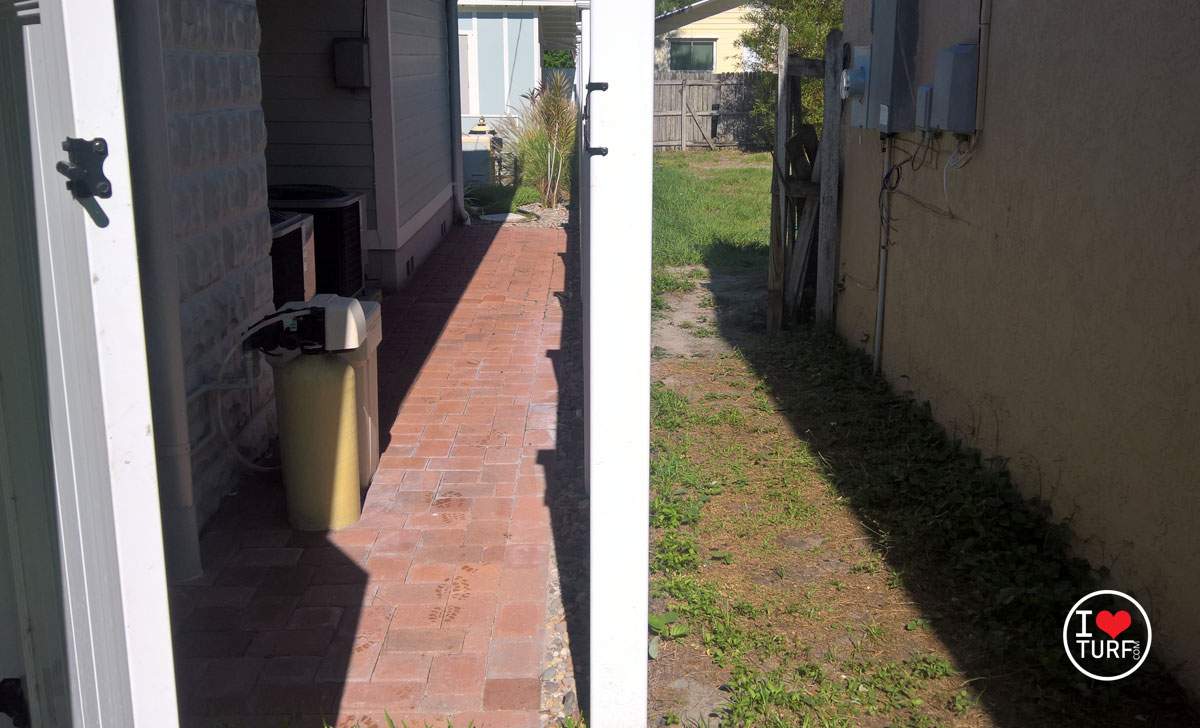
The most obvious reason to skip the side yard grass is traffic. Many homeowners tell me, “Nobody uses that area.” Then the weed eater guy uses it. The pool guy uses it. The mow guy uses it. Dogs and kids use it too. All of that back-and-forth wears the turf out.
St Augustine is the least traffickable of the lawn grasses. Plant it in a side yard and sooner or later you will end up with a muddy path or worse.
Shallow Soil Next to the House
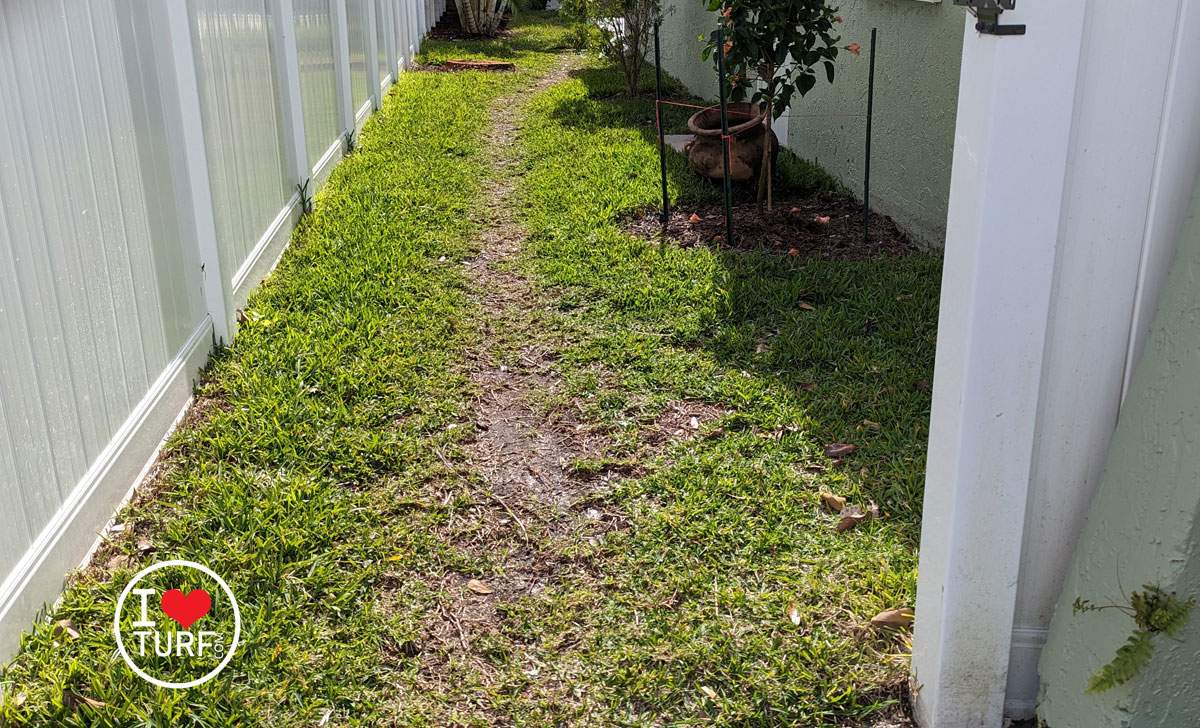
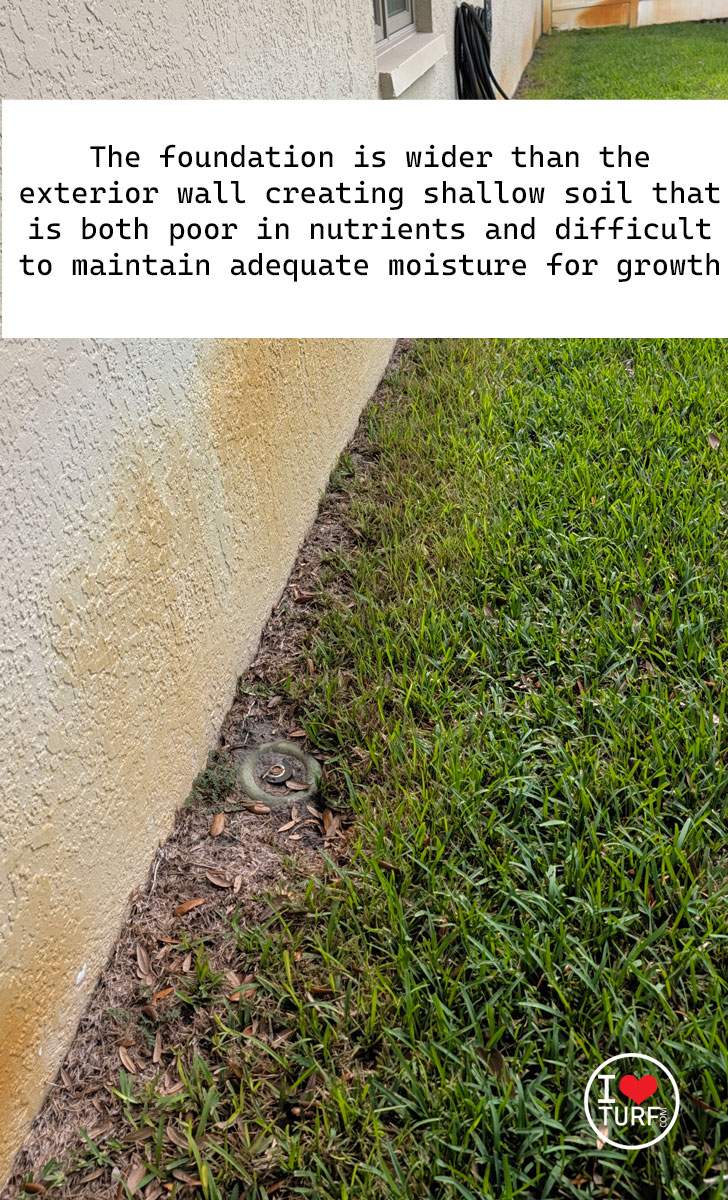
Many people do not realize that the foundation of the home extends a couple of inches beyond the wall, maybe 6 to 8 inches. Next to the house, the soil is only about four to six inches deep over that concrete footing. That makes it a very difficult place to grow grass. Grass can't manage water and nutrients in such shallow soil. Shallow soil also dries out much faster than deep soil because it is not connected to any below-ground water source.
Grass right next to the house also invites power equipment to damage your home. String trimmers and mowers bump the wall, knock off stucco, and damage the paint. These areas are much better suited to mulch, pavers, or even a foundation planting of shrubs and mulch.
Roof Runoff Scours the Soil
Where there are no gutters, rain sheeting off the roof drops 10 to 12 feet to the soil. That creates a scouring action that picks up sand and works like a sand blaster. It damages the turf stems, roots and leaves. In the end you have what looks like a ditch running along the side of the house, just below the drip line of the roof.
Too Wet, Too Long
Side yards are often too wet for too long to grow good grass. Roof runoff, rain, mowers and foot traffic combine to turn the area into a sloppy, muddy path.
Stagnant Air Suffocates Grass
Air drainage is another problem few people think about. Turf respires at night, taking in oxygen and giving off carbon dioxide. CO2 is heavier than oxygen, so it settles into the turf canopy. With a building on one side, a privacy fence on the other and a gate at one end, the air over a side yard can stagnate and the grass starts to decline.
This is a slow, chronic decline that plays out over months or years. It keeps damaging the grass until it stops growing.
What to Do Instead
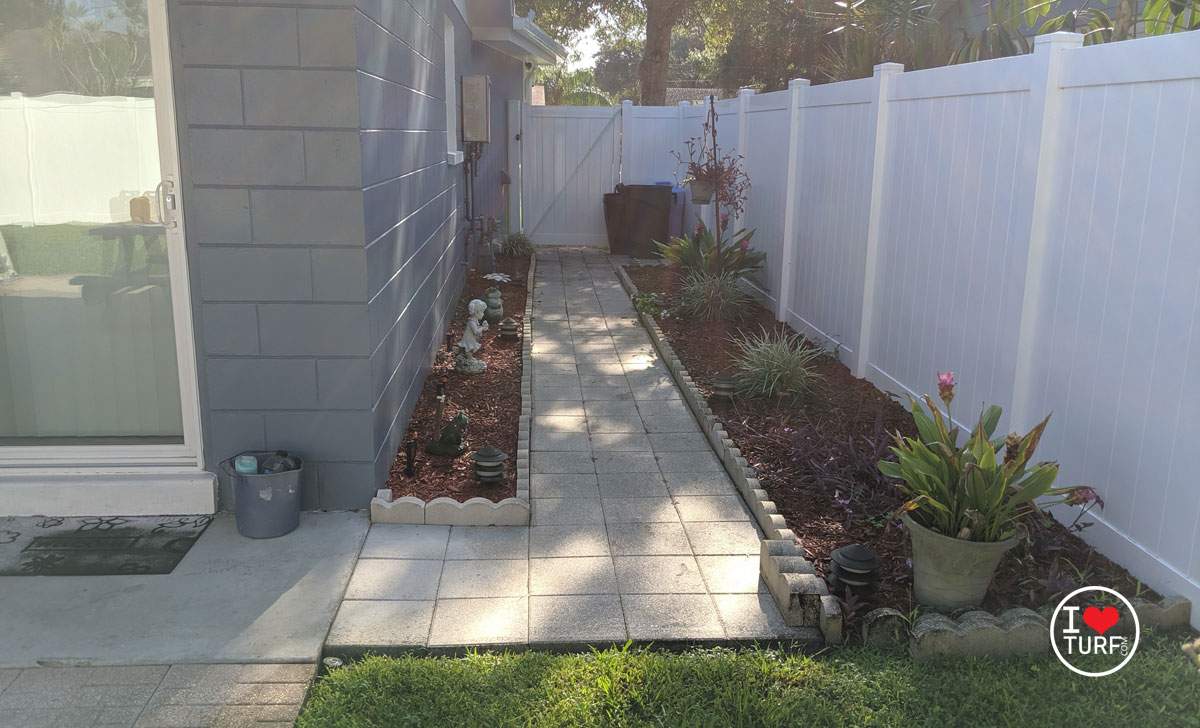
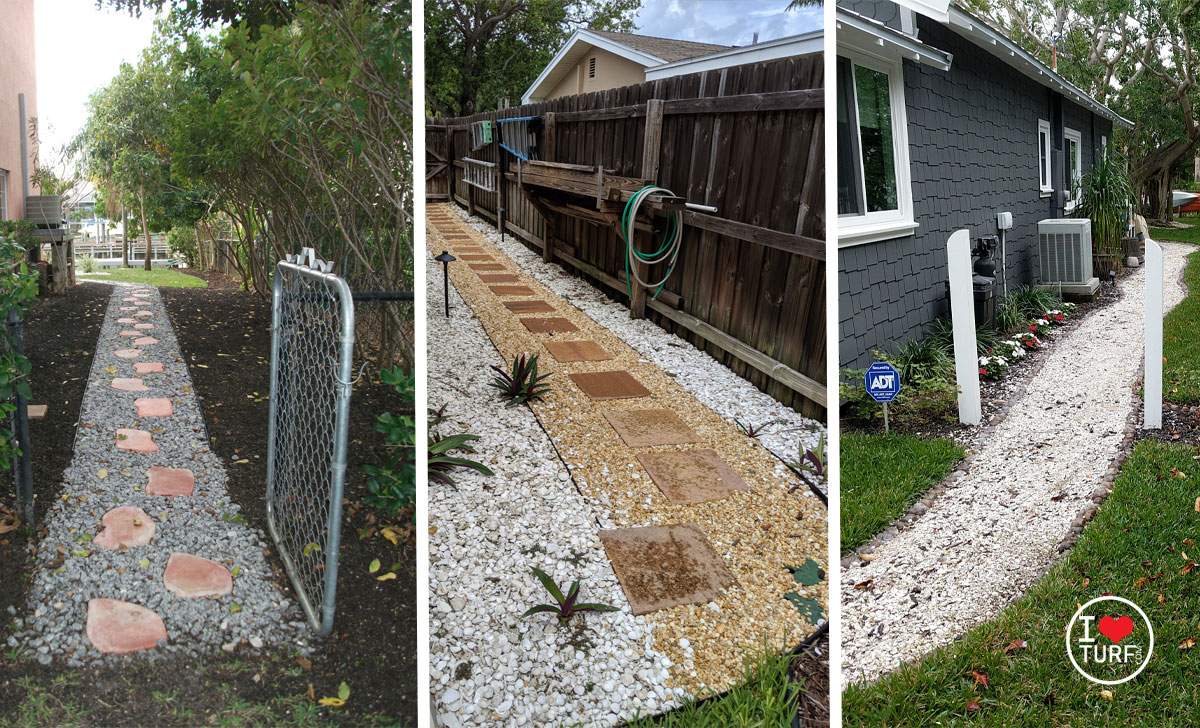
Since a side yard is a hallway that concentrates traffic into a small area, it is better to treat it like one. Consider a garden path of stones, pavers or even concrete. My favorite is a meandering footpath with flowering shrubs dotted here and there and a nice decorative mulch. Another alternative is crushed shells which creates a firm durable surface.
Side yards are also great places to store outdoor equipment such as kayaks, mowers, grills, extra roof tiles and pool equipment.
Be Creative with Your Side Yards
Below are a few examples of alternatives to turf for a side yard. Get creative using different colors and textures to create an inviting garden path. Use walls and fences to store pool equipment, kayaks, and more.
Save Your Money for Where It Shows
Side yards are usually out of sight. Nobody sees them, so there is no reason to spend the extra money it takes to keep turf looking good there. Turf is the most expensive element of your landscape. Put it where it is seen and enjoyed, and use mulch, stone or pavers in the sideyards out of sight of the public eye.
Want more practical lawn and landscape advice? Sign up for the iloveturf.com newsletter and get our latest articles delivered straight to your inbox.
Sign up for our newsletter here: ILOVETURF.com newsletter